Guides / 4 min read
Public Affairs and Institutions: Media Relations, Strategy and the Right Tool (2026)
For a public affairs team (a company, a trade association, an NGO, a consultancy) as for an institution (a ministry, a local authority, a public agency), the press isn’t just one channel among others. An article in a national daily, a specialist title or the regional press feeds the public debate that decision-makers follow. The challenge: reaching the right journalists, at the right moment in the political calendar, with verifiable facts.
Your needs
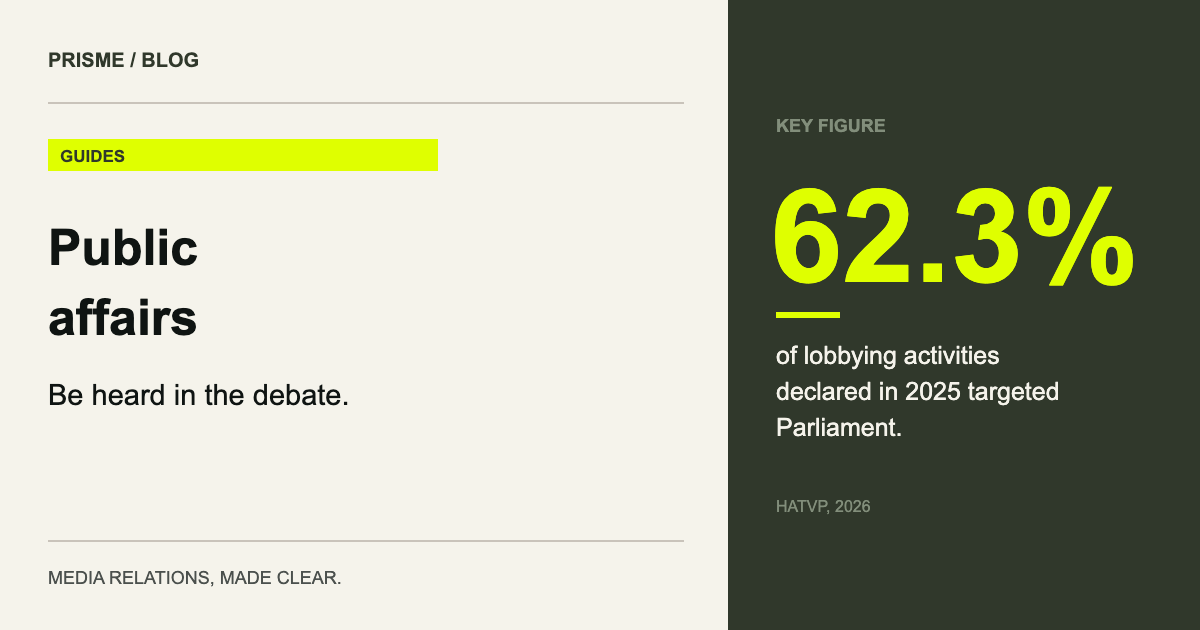
- Following the political calendar. A bill, an amendment, a budget: the window to be heard is short. In France in 2025, 57.1% of declared lobbying activities concerned a legislative decision, and Parliament was targeted in 62.3% of them (HATVP, 2026).
- Reaching the journalists who follow your issue, not every political journalist. The economy, agriculture and food, health and the environment alone account for 41.8% of declared activities (HATVP): each has its own specialist reporters.
- Not forgetting the regional press. A member of parliament reads the daily paper of their constituency; a local official reads the one covering their area.
- Rigor and traceability. Sourced figures, identified spokespeople, and a record of what was said to each journalist.
- Being heard in a crowded field. 3,668 interest representatives were listed on the HATVP register on 30 April 2026, nearly 5% more than a year earlier (HATVP).
The strategy to adopt
- Time your statements to the calendar: committee review, floor debate, budget bill, consultations. Brief journalists before the vote, not after.
- Map journalists by issue: those covering your sector, those following Parliament, and the regional press in the areas concerned.
- Bring substance: data, studies, concrete cases, people to interview. A journalist covering a bill wants facts and voices, not talking points.
- Coordinate public affairs and communications: one message and one shared record of press exchanges, to avoid duplicates and contradictions.
- Stay transparent: in France, lobbying activities aimed at public officials are declared to the HATVP. Its guidelines set out what counts.
Mistakes to avoid
- Sending the same press release to every political journalist: 86% of journalists reject a pitch that doesn’t fit their beat or audience (Cision, 2025).
- Speaking up once the bill has passed.
- Forgetting the specialist and regional press.
- Leaving the relationship history in one adviser’s inbox.
What PRisme brings to public affairs
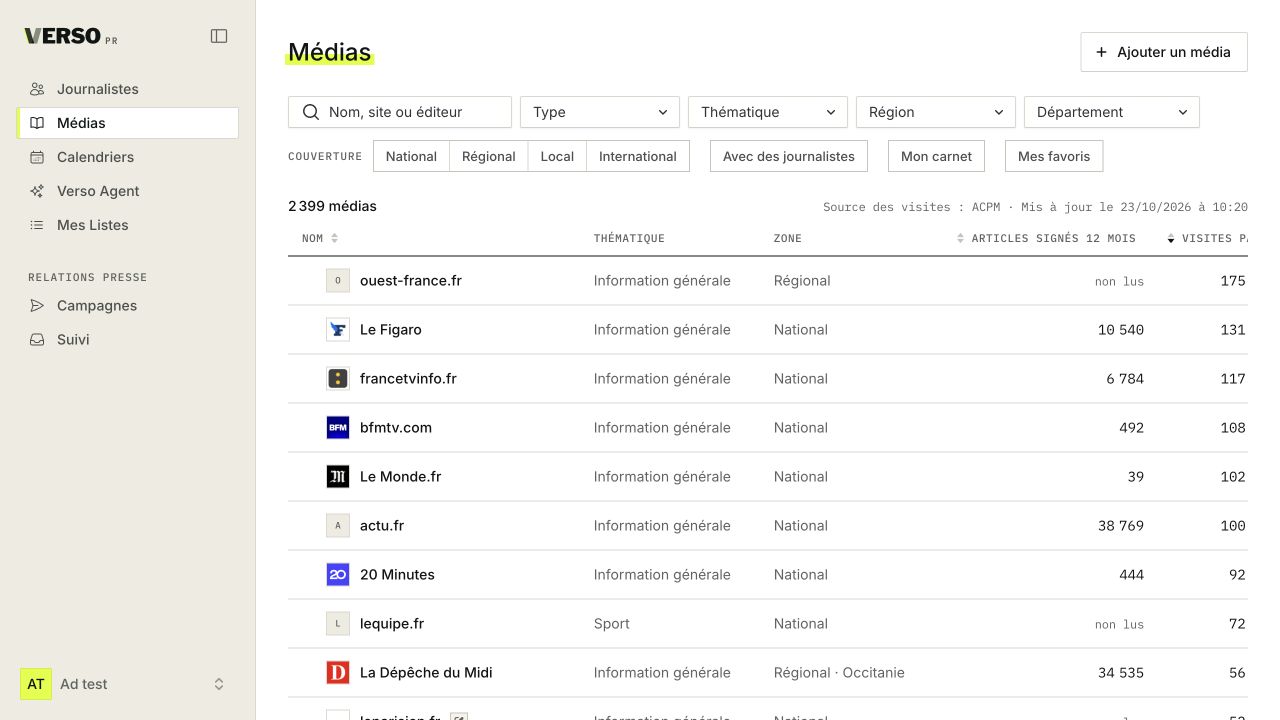
- 30,000+ verified press contacts in France, national, regional and local press, with their latest articles: you see who recently wrote about your issue.
- Search by topic: describe your issue, for example “electric vehicle taxation”, and PRisme suggests the journalists who cover it, explaining why.
- A shared CRM: every exchange with a journalist stays visible to the whole team, public affairs and communications alike.
- Alerts on your topics, to react fast when an issue is back in the news.
- A dedicated offer for public affairs and institutions is in the works. Book a demo to tell us what you need.
FAQ
Are media relations and lobbying the same thing?
No. Media relations address journalists. Lobbying (interest representation) targets public officials (members of parliament, government members, administrations…) and, in France, is declared to the HATVP. The two work together: press coverage feeds the debate decision-makers follow.
Which journalists should you target on a bill?
Those who cover your sector, those who follow Parliament, and the regional press in the areas concerned. Their latest articles say more than their job title about what they really follow.
Is PRisme suited to public institutions?
The journalist database, topic search and shared CRM already work for an institution as for a public affairs team. A dedicated offer is in the works: write to us to be part of it.
Sources
- HATVP — Review of lobbying declarations, 2025 (in French)
- HATVP — Register of interest representatives: guidelines, April 2026 (in French)
- Cision — State of the Media 2025